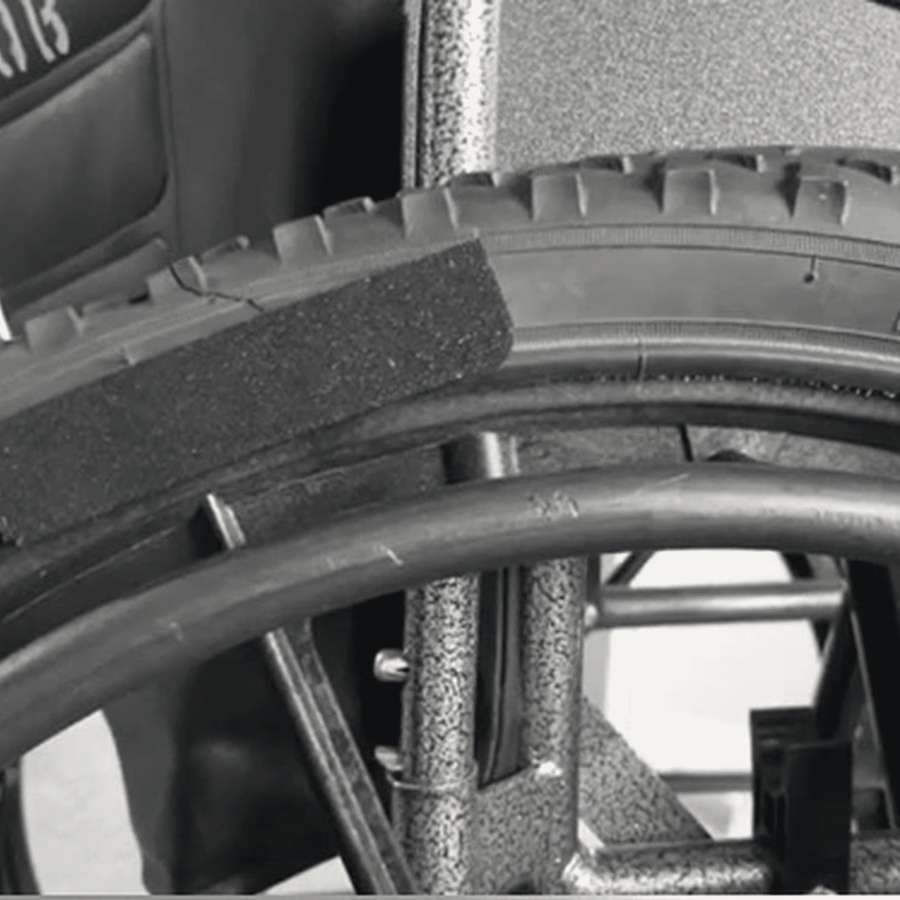
CASE 01 · SELECTED WORK

Designing a lower-cost connection between manual wheelchairs and standard scooters

A $25 first prototype became a parameterized mobility-product system, a three-person TOM project, and the seed of Motion+.
Alexzander Davidson

Technical product portfolio

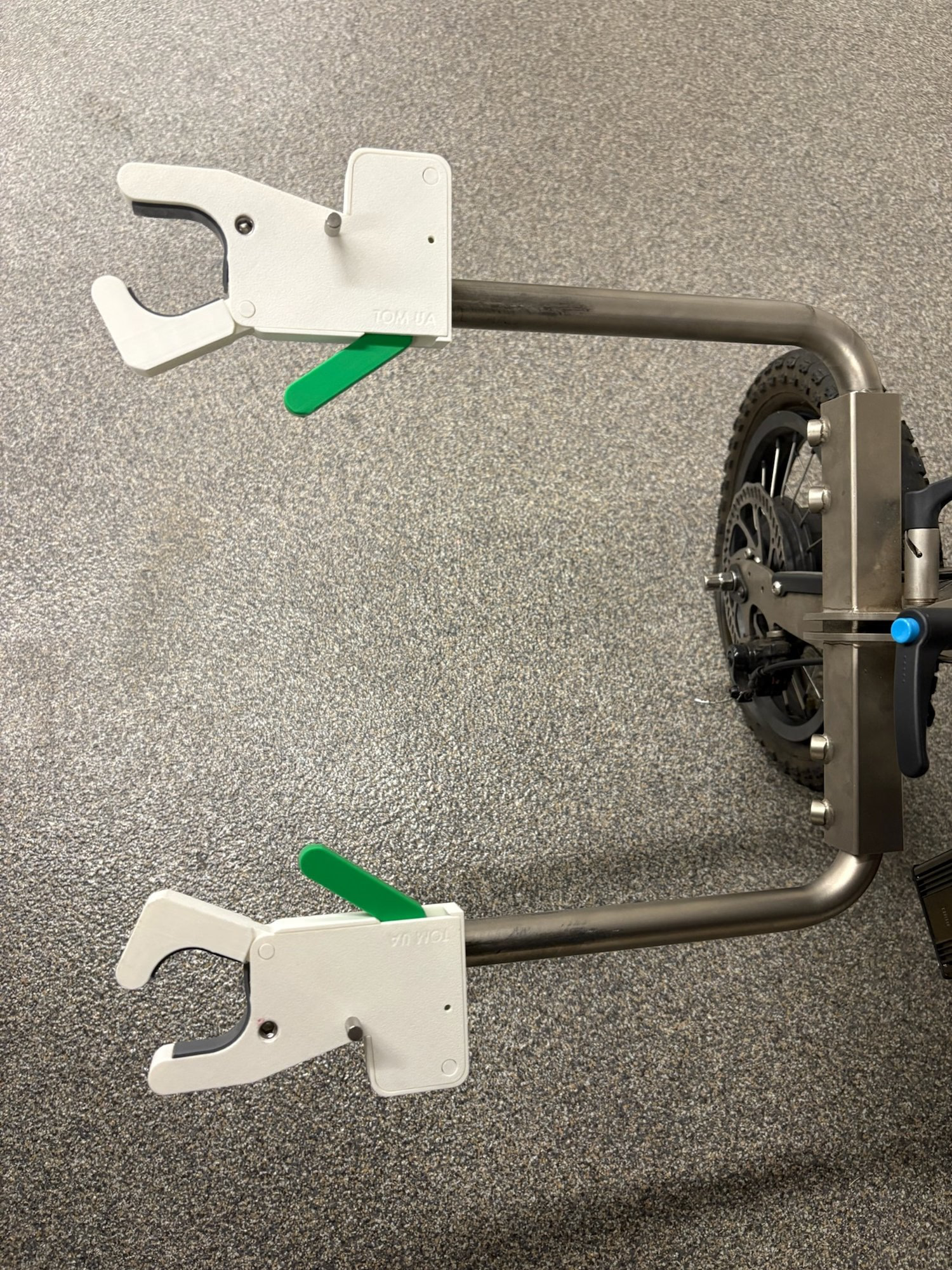
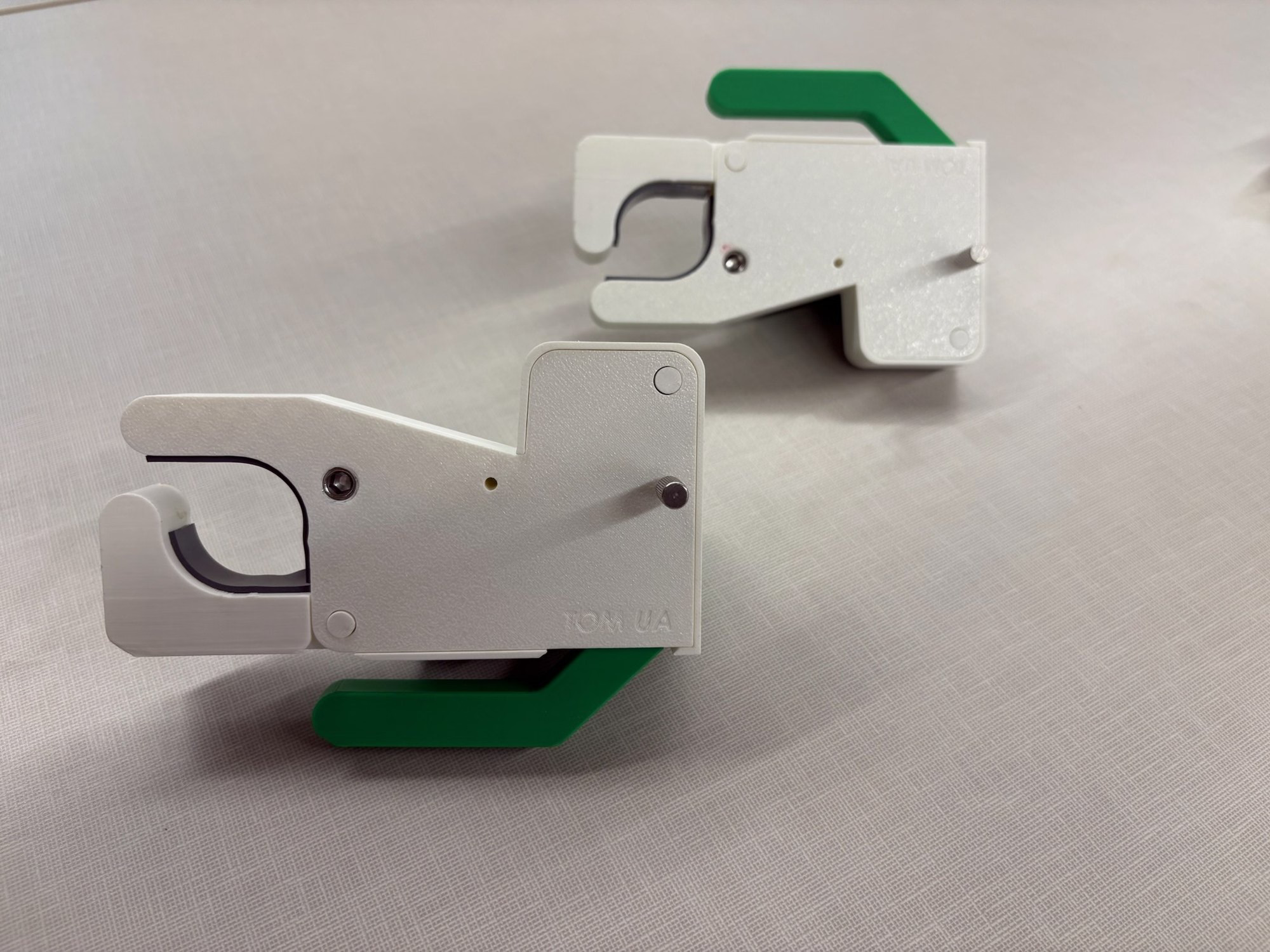
Two assembled white-and-green QuickClamp physical prototypes
Role
Originator of initial QuickClamp; Co-Founder & CTO, Motion+
Team
Initial solo build → three-person TOM team → four-person Motion+ team
Dates
Jan 2025–present
Status
Prototype development; pilot pending safety testing
Methods
SolidWorks · design tables · 3D printing · user requirements
Disclosure
Public-safe case study

The mismatch

01

The market’s default answer replaced an entire system.

Specialized powered attachments can cost thousands of dollars. Standard consumer scooters are widely available. The product opportunity was the connection between two systems people already owned.

The first question was not how to make a more elaborate wheelchair. It was whether a removable, customizable clamp could add the missing mobility capability without permanent modification.

That constraint became a broader product principle for Motion+: retrofit, do not replace.
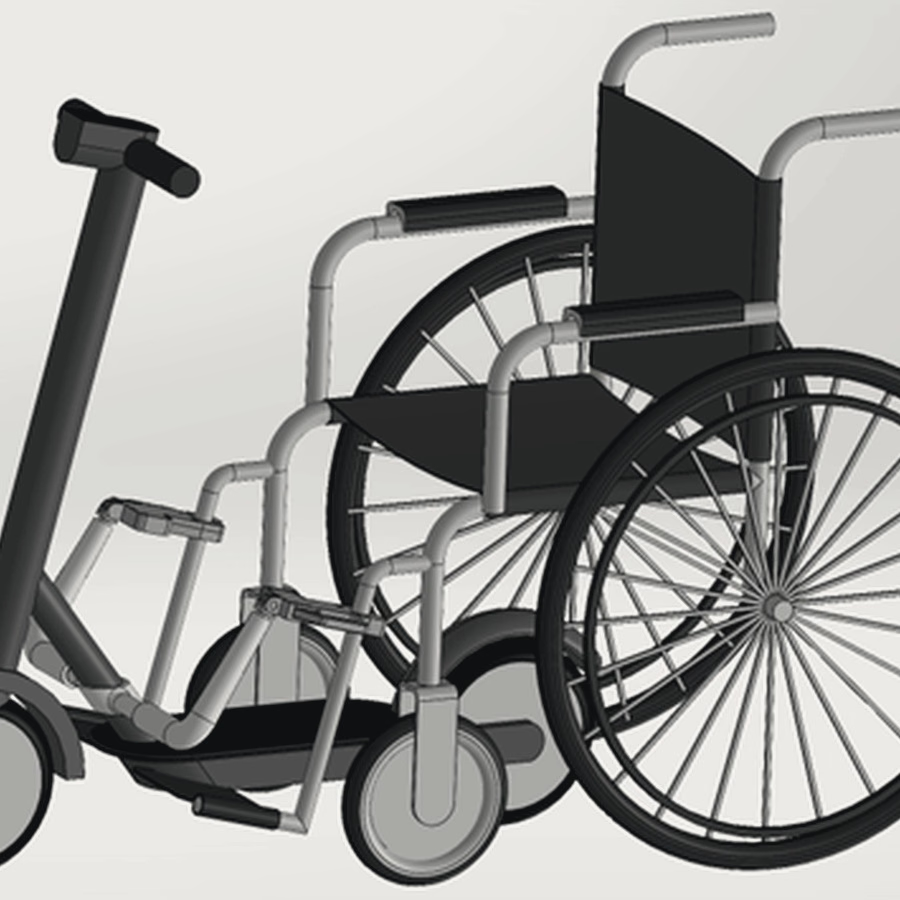
CAD rendering of a wheelchair and scooter connected by the U-Clamp system
FIG 01System view: the designed object is the connection between an existing manual wheelchair and an existing consumer scooter.

The first wedge

02

Build the cheapest honest version that can teach something.

$25 initial materials

Two physical QuickClamp prototypes mounted to a wheelchair frame
FIG 02Physical proof: two printed clamp assemblies mounted to the existing wheelchair tubing.
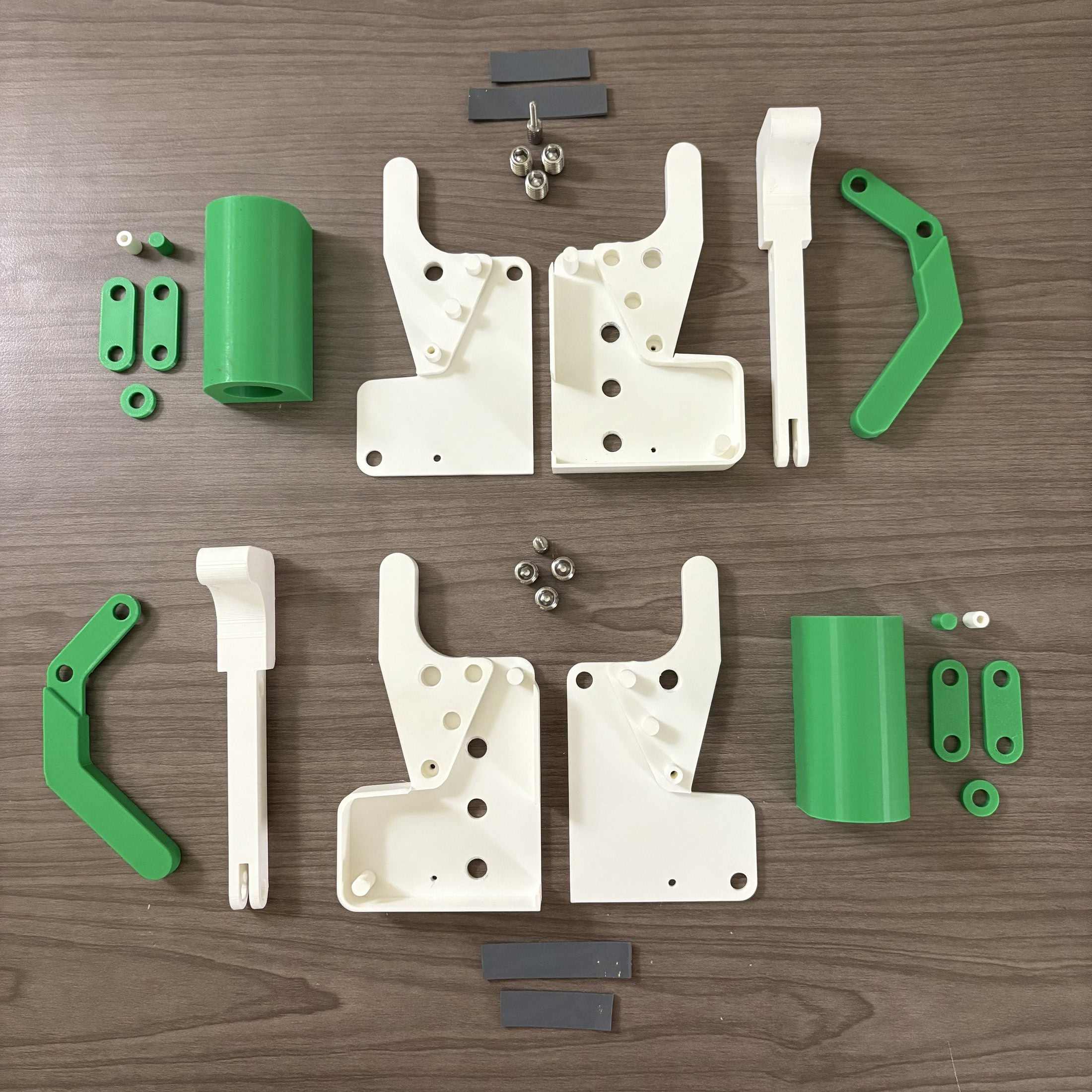
Exploded QuickClamp assembly showing printed bodies, lever, fasteners, and grip material
FIG 03Exploded assembly: printed parts, standard fasteners, a release lever, and grip material form the initial mechanism.

Constraint

Connect existing equipment without permanent modification.

Decision

Use a low-cost, open-source, 3D-printable first architecture.

Evidence

Initial prototype built with approximately $25 in materials.

Next test

Prove safety, repeatability, broader fit, and real setup performance.

Requirements

03

Human-centered design becomes useful when it changes the engineering.

R-01

Fit different wheelchair and scooter tube diameters

Required
R-02

Remain removable and avoid permanent frame modification

Required
R-03

Support low-cost, 3D-printable iteration

Required
R-04

Make setup understandable while treating dexterity and safety as engineering constraints

Required

Decisions

04

A working one-off bracket was not a repeatable product.

01

Parameterize instead of manually remodeling

Tube variation made one fixed geometry insufficient, so the workflow reduced customization to two controlled diameters.

02

Use a guardrailed range instead of claiming universal fit

The generator accepts only the dimensions represented by the current source workflow and rejects inputs outside them.

03

Keep maturity visible instead of marketing past the evidence

Prototype, filing, award, partnership, pending pilot, and adoption remain separate states.
Parameterization

05

Two measurements drive a complete print-ready variant.

18–32 mm · 12.7–33.02 mm

Parametric clamp generation workflowTwo tube-diameter inputs are validated, written to a SolidWorks design table, used to rebuild an assembly, and exported as a complete set of nineteen STL files.01 · INPUT18–32 mm wheelchair12.7–33.02 mm scooter02 · DESIGN TABLETwo controlled variablesMillimeters or inches03 · REBUILDParameterized assemblySolidWorks regeneration04 · OUTPUT19 STL files / variantNamed and packaged
  1. 01 · InputWheelchair 18–32 mm
    Scooter 12.7–33.02 mm
  2. 02 · Design tableTwo controlled variables
    Millimeters or inches
  3. 03 · RebuildParameterized assembly
    SolidWorks regeneration
  4. 04 · Output19 STL files per variant
    Named and packaged
FIG 04Two measured diameters move through validation, a design table, assembly rebuild, and a complete print-ready output set.
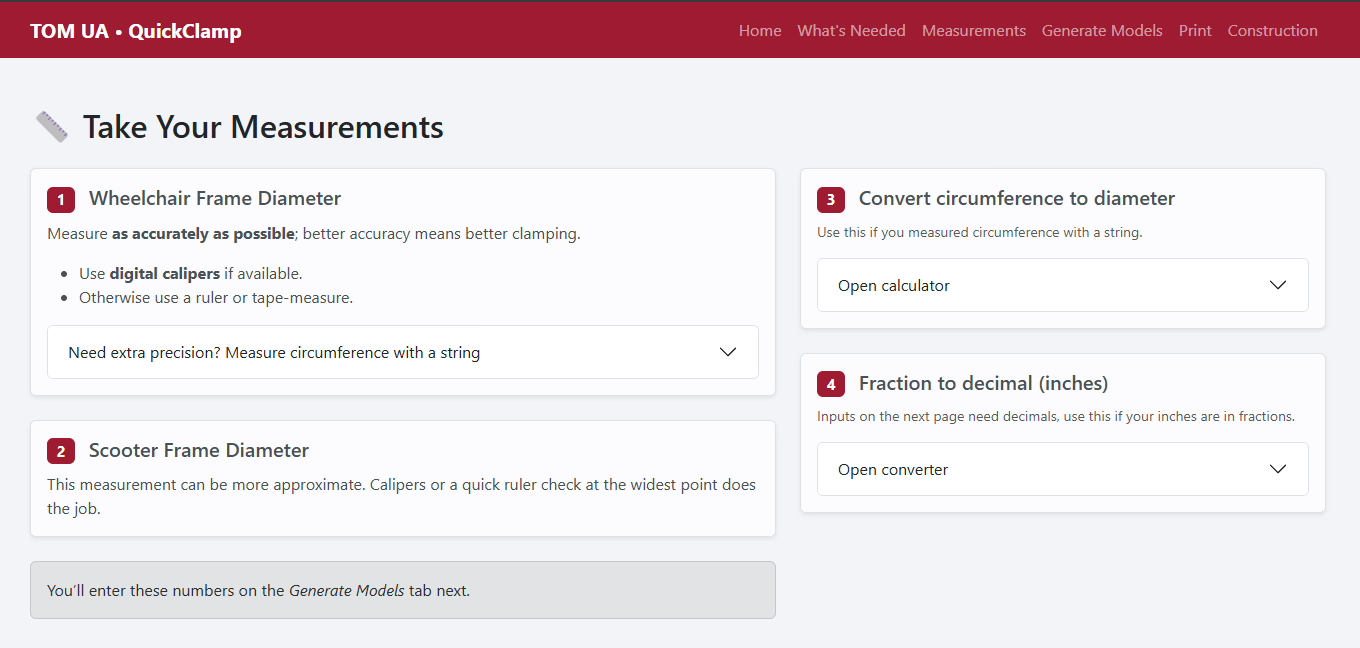
QuickClamp interface explaining how to measure wheelchair and scooter tube diameters
FIG 05The user-facing workflow narrows the problem to two measurements and explains the acceptable inputs.
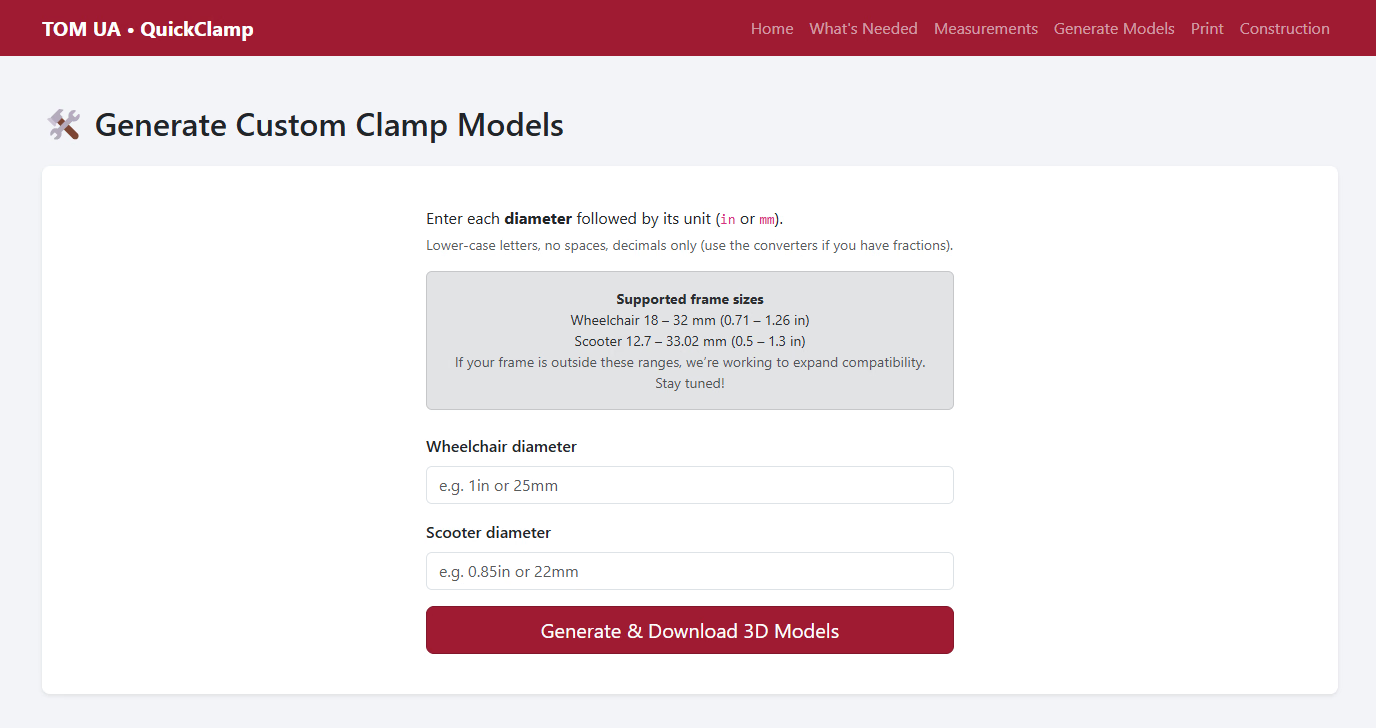
QuickClamp generator form with wheelchair and scooter diameter inputs
FIG 06The generator validates diameter inputs before invoking the SolidWorks export workflow.

Fabrication

06

The artifact has to leave the screen.

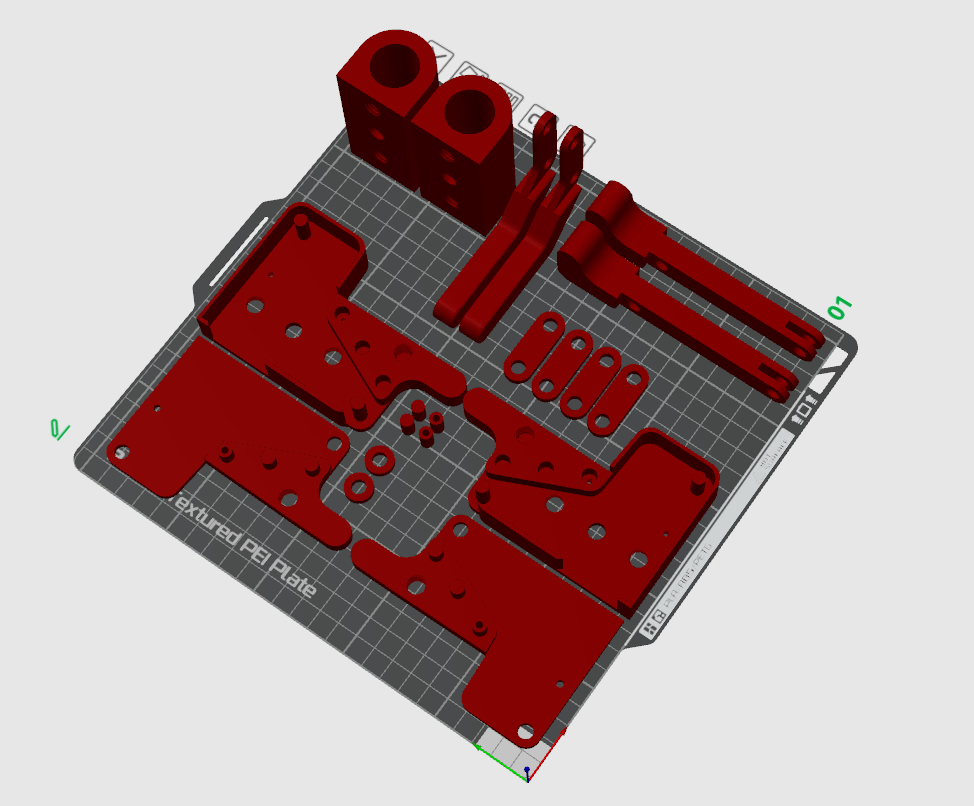
QuickClamp parts laid out in a slicer on a 3D printer build plate
FIG 07Print orientation is part of the product workflow, not a decorative screenshot.
FIG 08Five-second process excerpt from the first-party printer time-lapse. Motion stops when the viewer pauses it and does not autoplay.

Evidence

07

External recognition advanced the work. It did not finish the engineering.

Achieved · individual

Verified 2026-09-25

Built the first QuickClamp prototype using approximately $25 in materials

achieved

Achieved · team

Verified 2026-09-25

Three-person TOM team won the 2025 Global Innovation Challenge Daily Living Grand Prize and $2,500

achieved

Reported · company

Verified 2026-09-25

Motion+ reports four provisional patent applications; preserved receipts directly corroborate three

reported

Pending · team

Verified 2026-09-25

UA Adapted Athletics pilot commitment is confirmed and contingent on required safety testing

pending
Related product work

08

Selected mobility upgrades share the same retrofit thesis.

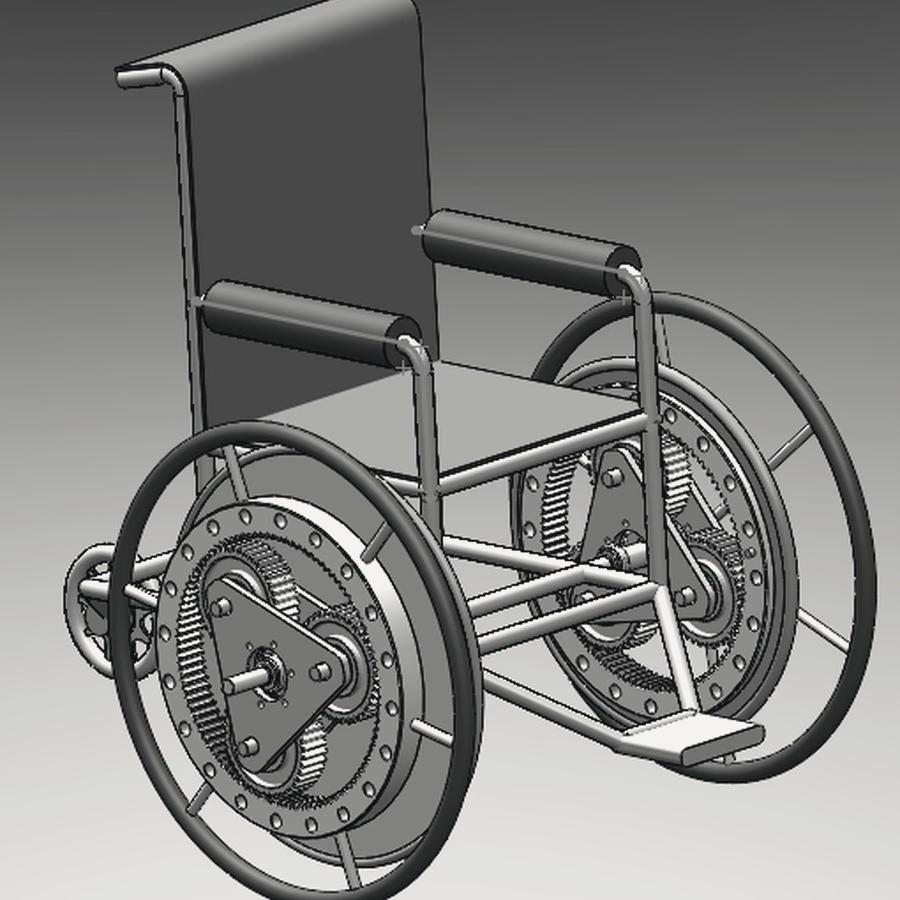
CAD rendering of a wheelchair with a planetary gear wheel
FIG 09Mech Chair explores mechanical advantage without a motor or battery. Product status and personal contribution remain separately controlled.
Close-up of removable tread wrapped around a wheelchair wheel
FIG 10Wrapid explores a removable all-terrain wheel cover for existing wheelchair wheels.

What remains

09

The next stage is a test program, not a stronger adjective.

OPEN-01

Attachment-time and repeatability data

Not yet proved
OPEN-02

Braking and crowded-navigation performance

Not yet proved
OPEN-03

Broader chair/scooter fit matrix

Not yet proved
OPEN-04

Formal safety evidence, manufacturing handoff, and commercial adoption

Not yet proved

Selected evidence

10

The claims should survive leaving this page.

The person does not need replacing. The barrier does.